Vinarija Barbazza· Smokvica · Otok Korčula· The History
Everything on a bottle of Barbazza is lifted from a document you can still touch — a deed of sale, a notary's seal, a Venetian patent of nobility in perpetuo, a signature in an ancestor's own hand. The whole archive is a faith, set down in ink.
None of it was kept from sentiment: you do not carry five centuries of paper through war, plague and emigration unless you believe it is a promise — that the Serenissima… return in one way or another.
A Note·On the Spelling·Why it looks old
We write it the old way Tomasich not Tomašić deliberately. The accents are missing on purpose: the headline typeface Founder's Caslon is as old as the documents (1530–1759), and those later letters simply did not exist at that time. So wherever this old font appears we keep the 1700s spelling; the body text, in a modern face, is spelled the modern way.
Two men are to blame, and we forgive neither. Jan Hus invented the hooks and the dots in 1412, and was burned at the stake in 1415 — which we have always taken as a firm review of his orthography.
His hooks should have died with him in the fire. Instead, in 1830, a mainlander named Ljudevit Gaj dug them out of the ashes and hammered two onto our name. Under the banner of “National Unity” Gaj added insult to injury by imposing his language upon ours.
Ours is Čakavian — the speech of Istria and Dalmatia, to his Štokavian roughly what Scots is to English: a sister, not a daughter, and the one with the older library. It carried the first Croatian epic, printed in Venice in 1521, three hundred years before Gaj wrote a word. His reform made his tongue “Croatian” and ours a dialect. These headlines refuse the demotion. They are written in the island’s own language — hooks omitted, as found.
The First Deed · Smokvica
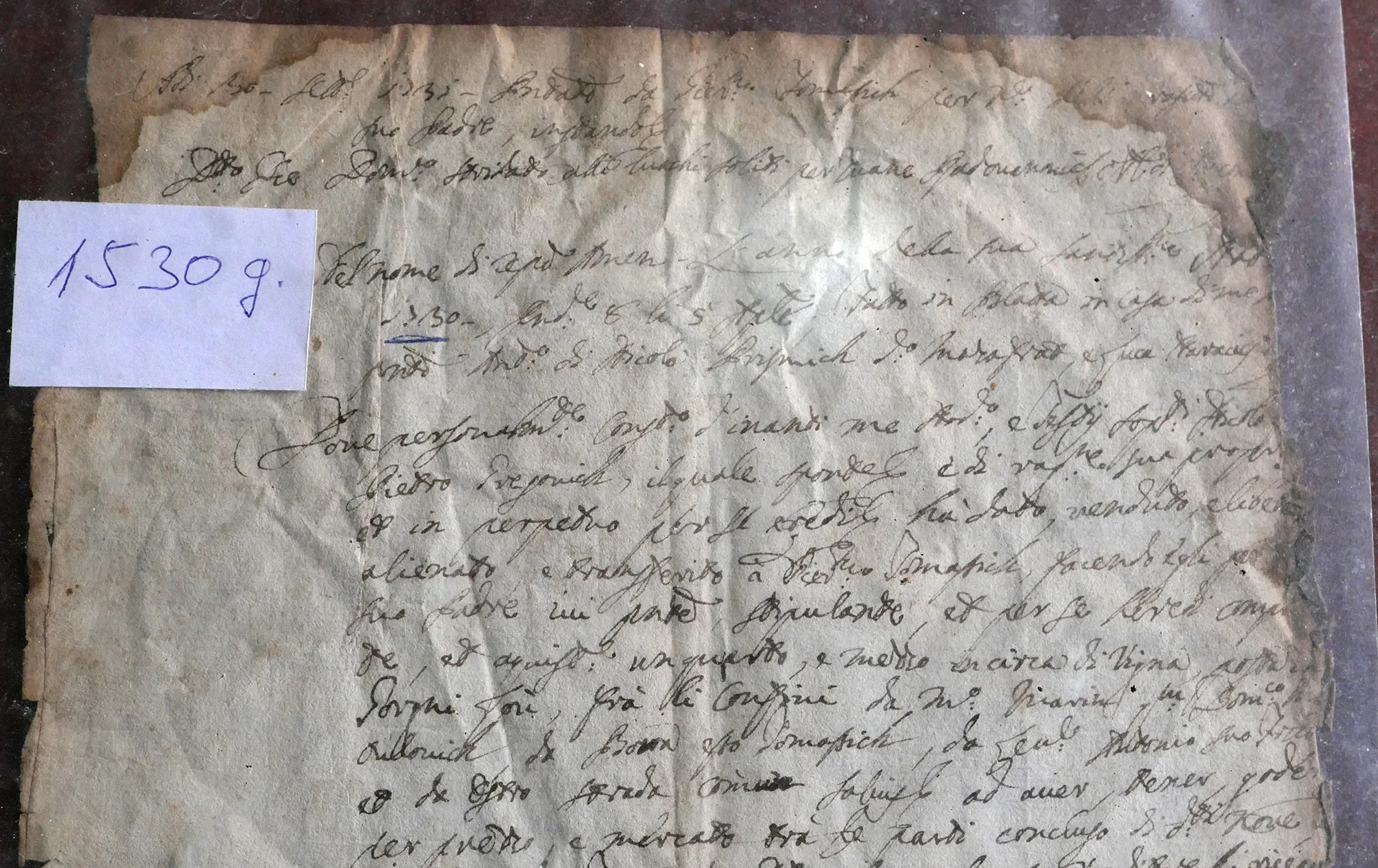
"Pietro Bresonich(?), il quale […] è di ragio[ne] sua propria, et in perpetuo per li [suoi] eredi hà dato, venduto, e liberamente alienato e transferito a Pietro Tomasich, facendo[gli] per suo padre […] stipulando, ed per sé, heredi suoi [e successori], un quarto e mezzo in circa di vigna,"
In 1530, Pietro Brsinich sells in perpetuity to Pietro Tomašić a quarter-and-a-half measure of vineyard, for an agreed price. It is the earliest paper we hold of a Tomašić buying vines — and the year we count from.
Oldest Tomašić charter for vineyards · Smokvica


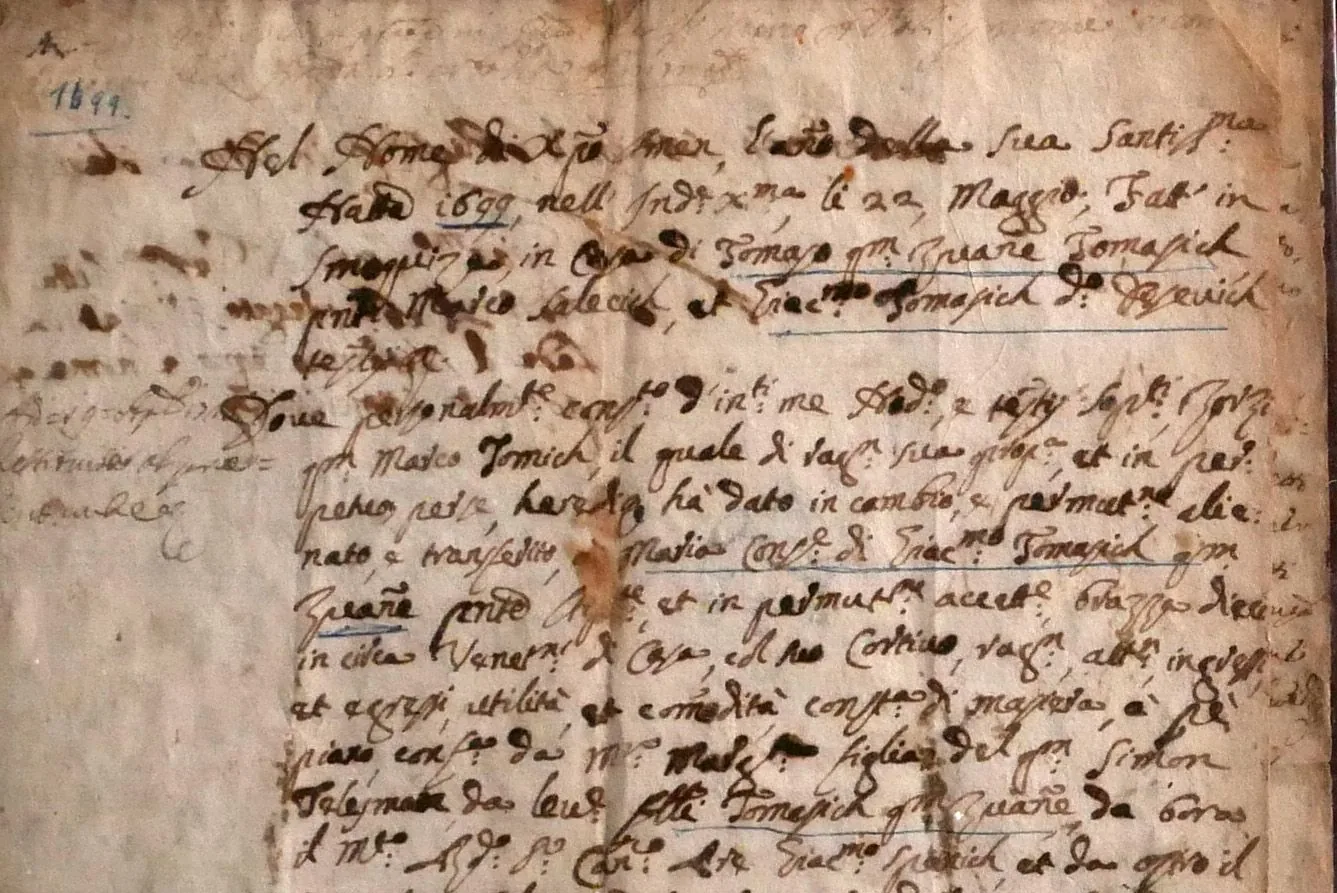
Smokvica · 22 May 1699
"In the name of Christ, 1699, the twelfth indiction, 22 May — done at Smokvica, in the house of Tomaso, son of the late Giovanni Tomašić; among the witnesses, Giacomo Tomašić, called Barbazza."
A house-with-courtyard is exchanged for a gognal-and-a-half of land at Sedina, the woman's share flagged dotale — dowry. The byname appears here for the first time, in a witness line — four hundred years before it returned to the label.
Smokvica deed · 22 May 1699
Notarial Register · Smokvica
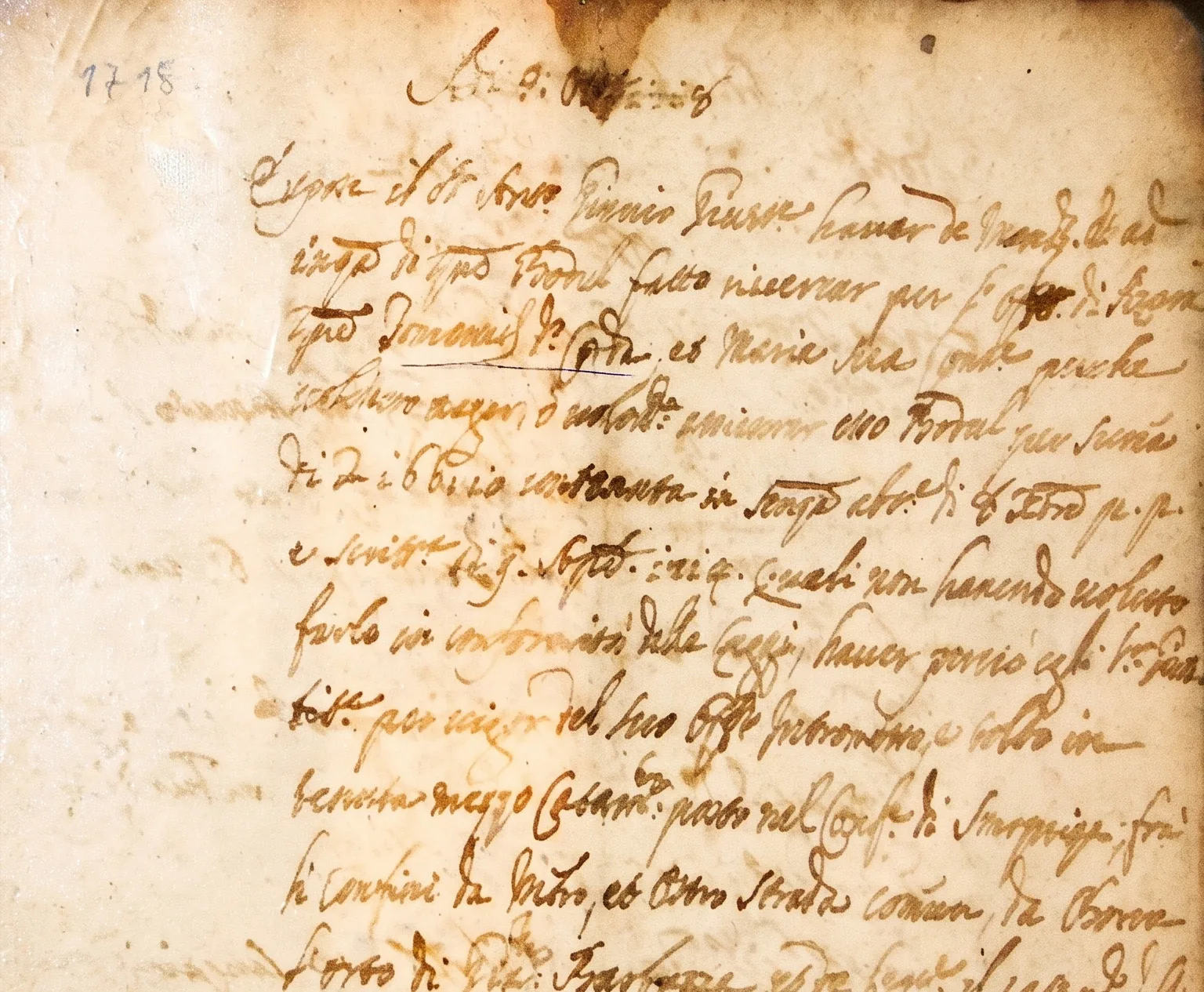
Two dated entries, both auction-and-debt business over land at Smokvica.
Entry One: a creditor (a Signor, sworn/giurato, name lost in the stain) declares a debt of cash owed by Domenico [——] and his wife Maria, tied to an earlier writing of 1714. The debtors having failed to pay per the laws, he moves to recover against a property — about a half-gognal at Smokvica (Smorquiza), fixed by its boundaries (a common road on the Ostro/south side, a neighbour whose name is drowned on the Borea/north) — which is to be sold at auction.
Entry Two: the follow-through — at the auction, a bid-note (polizza) held in hand is produced, no higher bidder comes forward, so the credit is settled and the note is entered/produced once more, "put into the acts."
Notarial register · Smokvica · 1718


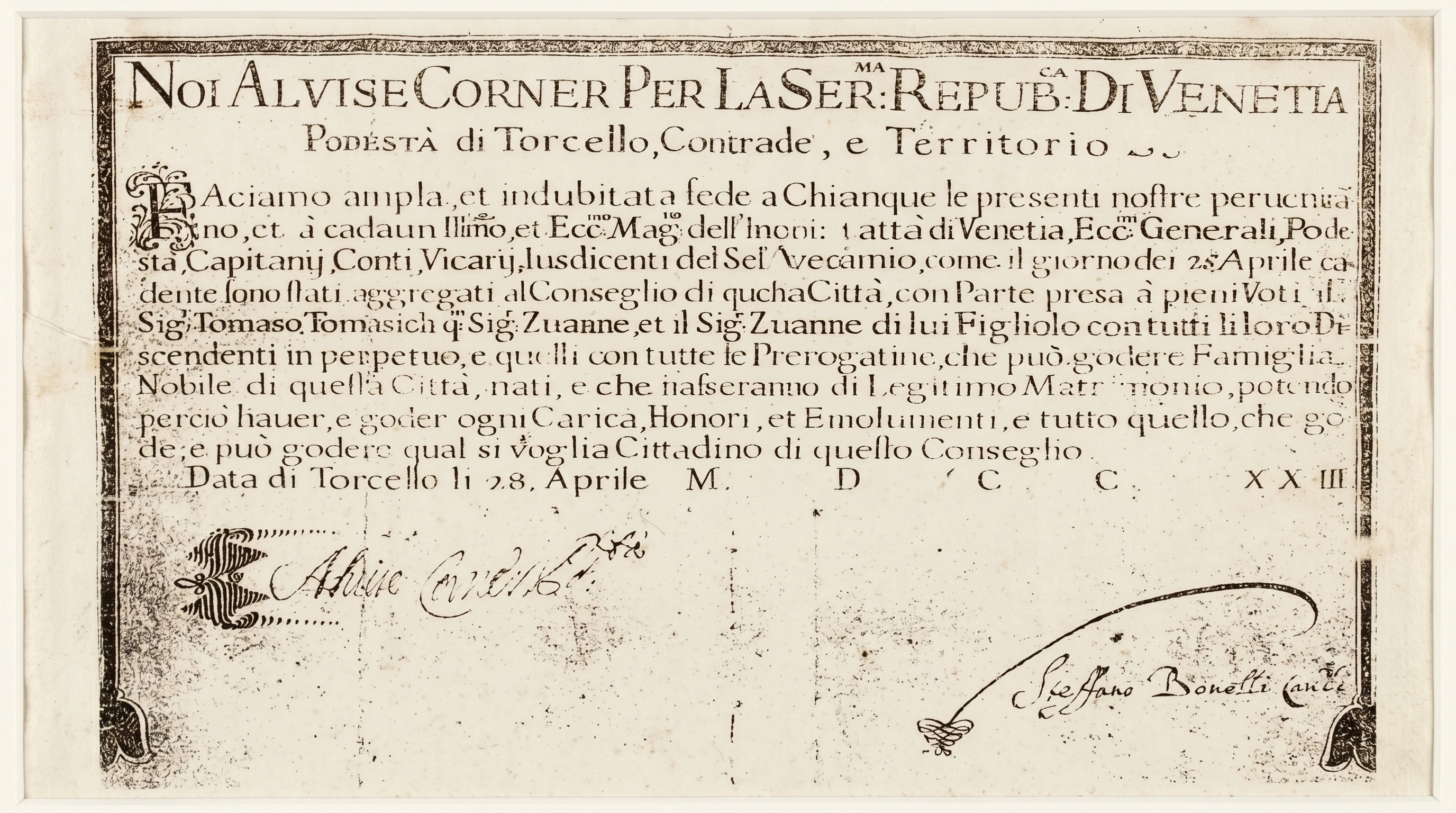
Alvise Corner · Torcello
"Noi Alvise Corner per la Ser:ma Repub:ca di Venetia, Podestà di Torcello, Contrade, e Territorio…"
On 28 April 1723, by unanimous vote, Signor Tomaso Tomasich, son of the late Signor Zuanne, and his son Signor Zuanne, with all their descendants in perpetuity — and these with every prerogative a Noble Family of this city may enjoy, born and to be born of lawful marriage, and able therefore to hold and enjoy every office, honour and emolument that any citizen of this Council enjoys or may enjoy. Given at Torcello, 28 April 1723. — Alvise Corner, Podestà — Steffano Bonetti, Chancellor.
The decree hangs, framed, on the cellar wall. We try very hard not to mention it at dinner. We mention it at dinner.
Venetian decree of nobility · Torcello · 28 April 1723

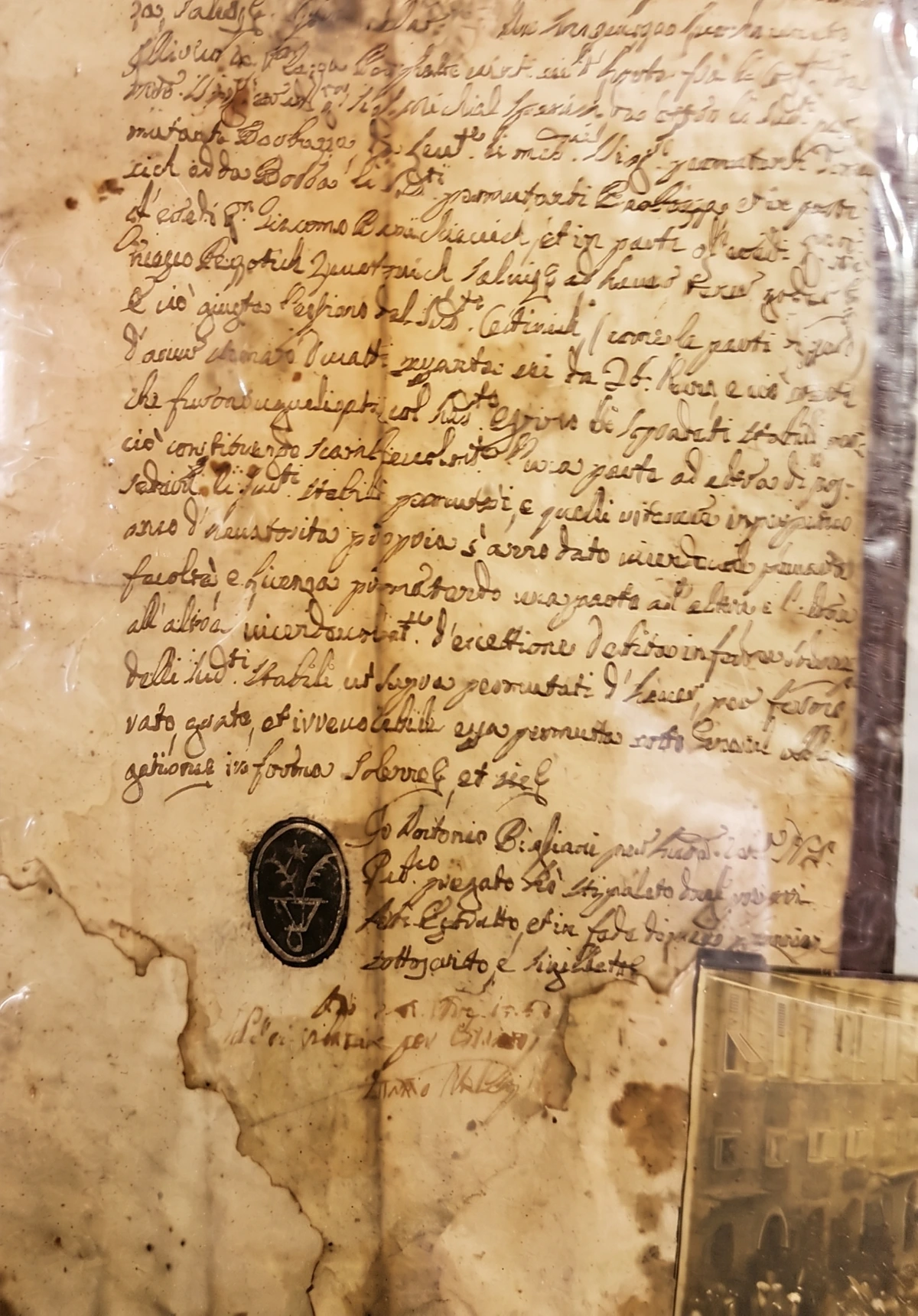
The Notary's Seal · A Deed of Exchange
"I, Antonio Bigliani, public notary, having been requested, drew up the acts and, in faith, undersigned and sealed them."
The flower-from-a-vessel crest, pressed into a contract to make a promise binding — the same seal that now stands on every bottle we fill.
This document is a permuta — a deed of exchange of land. Both parties' name is Tomasich; but neither is kin to the other. So the notary does what the parish has always done where Tomasichs run thick: he reaches for the byname to distinguish one kin from the other. The first party is a Tomasich whose byname is lost under a stain; the other he names Barbazza — and that one is us.
Each parcel is fixed by its neighbours — the two parties themselves to the east and north, the heirs of the late Giacomo Barichievich and of the late Pezzotich on the rest. A surveyor's estimo weighs the two sides and finds them equal at sixty-six ducats, so neither owes the other a coin.
Each grants the other possession in perpetuity, ratified and irrevocable, in solemn form. Bigliani, being asked, drew it up, signed it, and pressed the seal you see at the foot. To buy a field from the Tomasich down the hill, a Tomasich first had to prove he was a different Tomasich — and the byname that did the proving, Barbazza, is the one now standing on every bottle.
Antonio Bigliani, publick notary · 1753
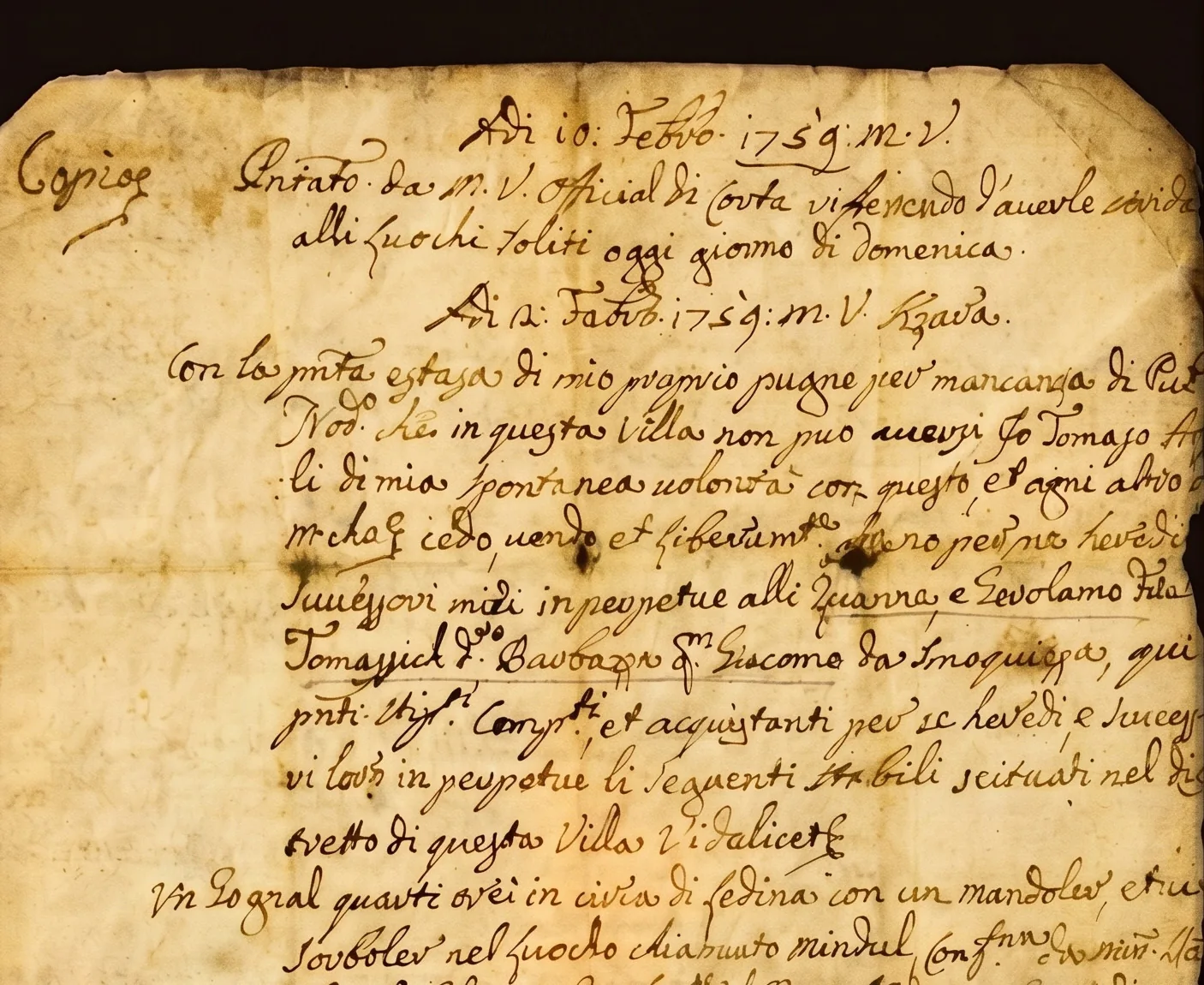
Tomaso Tomašić · The Hand
"With the plan drawn in my own hand — for want of a public notary, which this village cannot have — I, Tomaso, of my own free will cede, sell and release, for myself and my heirs in perpetuity, to the brothers Zuanne and Gerolamo Tomašić called Barbazza…"
The logotype on the bottle is this signature — the authentic handwriting of an ancestor, lifted from a 1759 land deed. We changed nothing about it. We wouldn't know how.
The hand of Tomaso Tomašić · 1759


The Field South of Smokvica
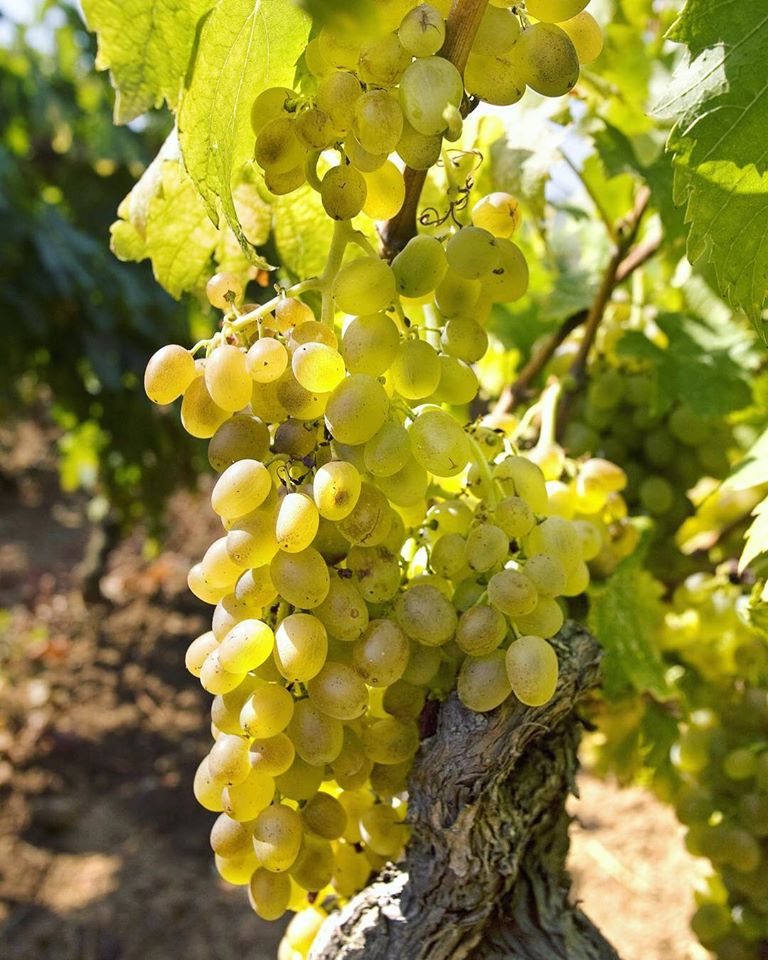
Marin Tomašić — "Barbaca," son of Marin "Caparin" — was clearing forest in the fields south of Smokvica when he found a white grape growing wild. He planted it, multiplied it, and gave the cuttings to every grower in Smokvica and Čara. He charged no one.
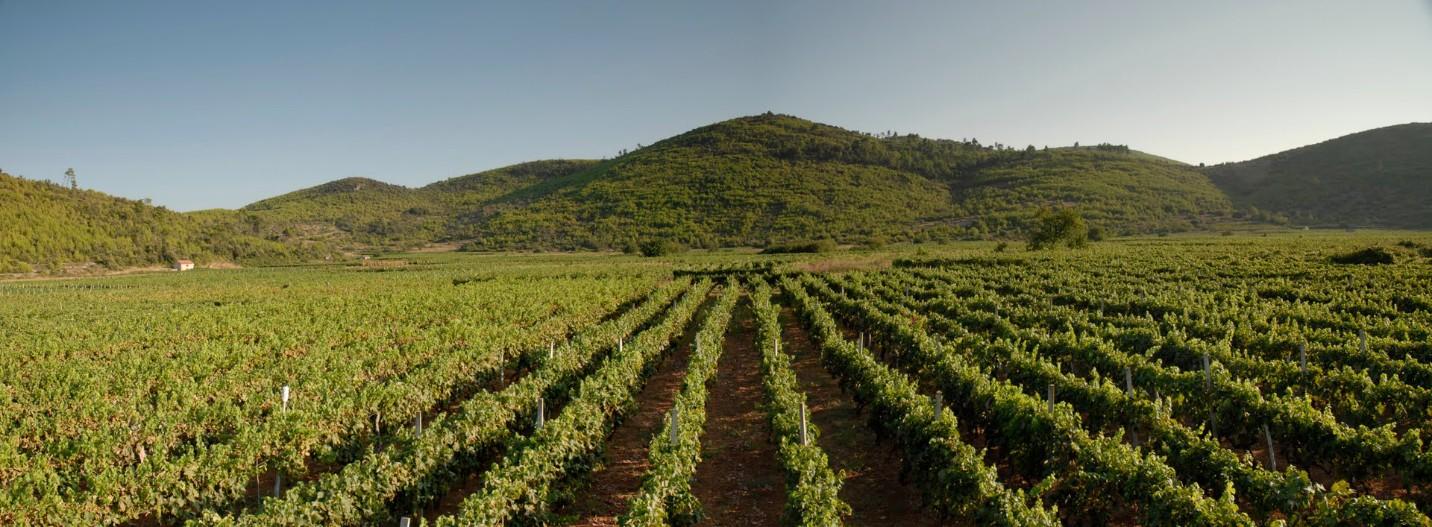
It wanted the deep, soft soil of the Čara–Smokvica field — not the bare stone of the high slopes — and there it gave straw-flower and banana, citrus, peach and apple, and a long, clean finish at the sea's own table. No one yet had reason to think it more than a good local white. It would take thirty years, and a catastrophe, before anyone saw that the soil it wanted was the only soil that would survive.
Pošip discovered in the forest · 1864
What the Louse Emptied
Phylloxera is a root louse no bigger than a full stop, carried from America on a few unwashed cuttings. It never touches the leaf or the fruit. It feeds on the root, underground, where no one can see it — and the vine, cut off from itself, simply dies.
It appeared in the Dalmatian islands in 1894, and it took its time. Korčula it did not finish until the 1920s — but finish it did. Vineyard by vineyard, the work of five centuries went under, killed from below by an insect you need a glass to see.
Phylloxera · the islands, 1894 · Korčula, the 1920s

The Reckoning·Karst·1894 – 1920s
The cure was ingenious: graft the European vine onto American rootstock the louse cannot kill, and the vineyard lives again. Where the soil was deep, it worked — Bordeaux came back within a generation, and stands today on American roots.
On pure Karst, it did not. From Chablis to the Jura to Crete and here across the Dalmatian islands, no American rootstock grips bare limestone the way the native vine once did. Plavac Mali had held that white rock on its own deep-driving roots; on a graft, it could not be brought back. Only the polje — the soil-filled basins — would take the graft.
The proof is Crete: the same island Karst, struck a lifetime later. But Crete had a state behind her and EU funds to spend.
Crete's grounds were mapped and matched to its soils, replanted basin by basin, and bringing back half of what was lost.
Korčula was left to do it alone. Of 4,136 hectares, 97% were gone, and what came back, the island raised vine by vine, unaided — to barely 10%. The rock set the ceiling at ~50% for any limestone island; Crete reached her 50%, Korčula reached 10%. That gap was never the rock. It was the hand that never came.
When the rock gave nothing back, the people left — whole villages at once, for the New World. Today the greatest number of Barbazzas lives neither in Smokvica nor in Venice but in Australia — lovely, by every account, and just about as far from a Venetian council seat as the planet will permit.
Pošip · Croatia's First Protected White
What could be replanted was the polje, and the polje's grape was Pošip. So the island rebuilt itself in white. Pošip did not defeat the reds — the louse and the rock did that. It was simply the grape left standing on the only ground the cure could reach.
And it earned the ground it inherited: a grape with no relation anywhere on Earth, uniquely fitted to that soil, better still for a year in oak — today the king of white wines in Dalmatia. A century after it was found in the forest, Pošip became in 1967 the first white wine in Croatia given protected status. Korčula, red for centuries, is now some 70% white.
Pošip · first protected white wine of Croatia · 1967


The Name Back on the Bottle
For two hundred years the tiles fell — Venice, then the vineyards, then the family itself, scattered to the far side of the world — and the Barbazza name slipped off the label, though never off the table.
In 2000 we took it up again: replanted the polje, the one ground that would still hold a vine, and put the old byname back where it belonged — on a bottle. The wine resumed, on Korčula, under a name the Council of Venice would still recognise, if not quite spell.
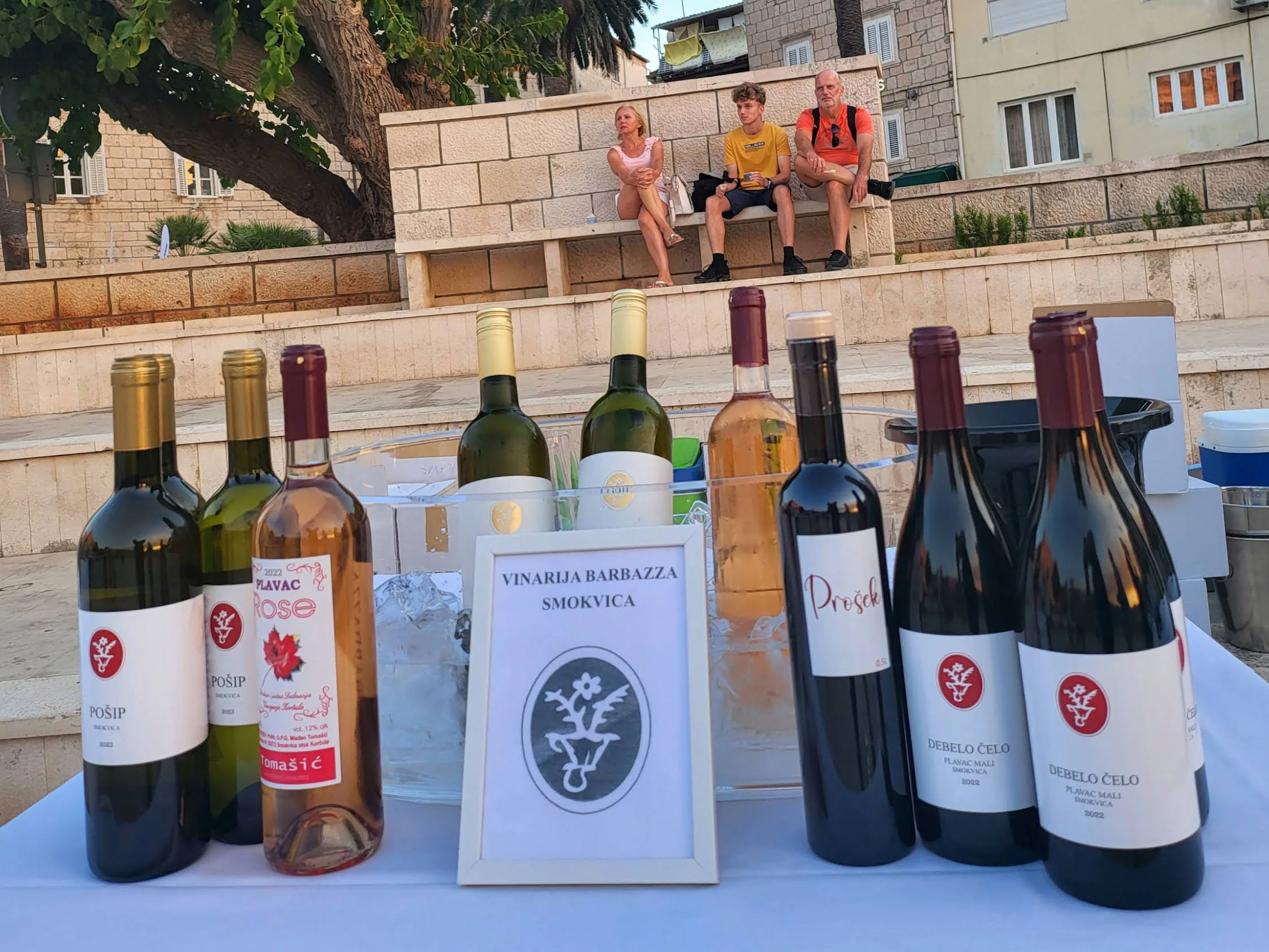
The range today · Croatian Island Product
No. 14 · Today
Five centuries after the first paper, three after Venice, one after the phylloxera scattered the family — the vine is back on the polje, the name is back on the label, and the byname first written in 1699 is still on the bottle. The line held, then broke, then was mended by hand.
Every last vine of it traces back to a grape our family found wild in a forest and gave away. The white that remade the island is ours — and the glass is yours.
Živjeli!
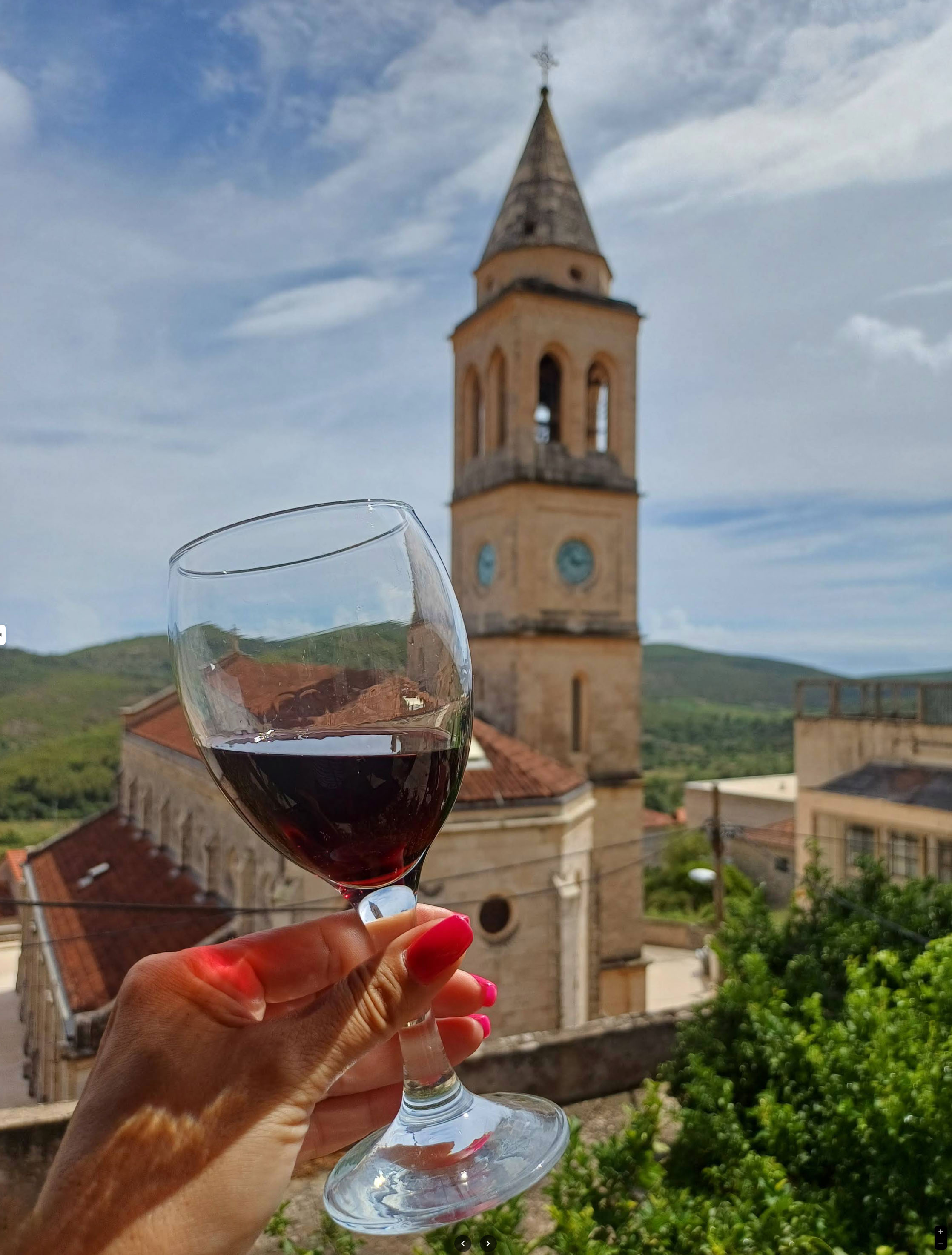
Smokvica · a glass of Pošip, the bell-tower behind it